South Korea · Itineraries
Seoul Itinerary: A Practical 3, 4 or 5-Day First Visit
Plan Seoul by neighborhood with palace closing days, a realistic daily rhythm, rainy-day swaps and optional extra days.
Our founder previously worked for a travel company. About Destinode
This guide contains affiliate links. We may earn a commission when you buy or book through them. How we fund our guides
On this page
Seoul rewards days grouped by area. A palace, a market, a café district and a viewpoint can all fit into a visit without crossing the city after every stop. Choose one main area each morning and a second nearby focus in the afternoon.
This is an editorial route for a first visit, not a timed tour. The three-day version assumes three usable sightseeing days and an already-arranged hotel. If your first day begins with a long-haul arrival, reduce that day's plan instead of starting the trip behind schedule.
Put the opening calendar ahead of the day numbers
The palace authority lists Gyeongbokgung's regular closure on Tuesday and Changdeokgung's on Monday. When a normal closing day is a public or substitute holiday, the closure moves to the next non-holiday day. Reorder this itinerary around the actual calendar. [1]
| Usable day | Main area | Keep flexible |
|---|---|---|
| Day 1 | Gyeongbokgung, the surrounding historic area and Insadong | Swap the palace day if its closing schedule conflicts |
| Day 2 | A central market, Myeongdong and Namsan | Use the clearer part of the day for views |
| Day 3 | Hongdae and a slower neighborhood afternoon | Allow time for shopping, cafés or an evening performance |
| Day 4, optional | A river outing or one south-Seoul cluster | Avoid adding every place south of the river |
| Day 5, optional | One preplanned outing or a second cultural day | Protect departure and weather margins |
Reserve timed visits first and put their location into your map. The distance between map pins does not include ticket queues, lunch, finding an exit or returning to collect luggage. Two substantial visits with a neighborhood walk often make a more satisfying day than five short arrivals.
Day 1: a palace morning and historic streets
Begin with Gyeongbokgung when it is open, then keep the afternoon around the historic center rather than adding a distant shopping district. Allow time to look through courtyards and buildings instead of planning only a photograph at the gate. Use the palace authority's seasonal hours and final-admission time to decide when to arrive. [1]
After lunch, make Insadong the second focus. This gives you room to browse, sit down and change the pace after an outdoor morning. If you choose another palace instead, make it the main visit for that half-day; do not add it simply because it is nearby on a map. Seoul Tourism's area guide is useful for choosing the streets and cultural stops. [2]
If a garden tour, hanbok rental or guided experience is important, check whether it has a separate reservation, a collection time or a return deadline. Keep the ordinary admission and any added experience separate in your budget. A rental photograph does not establish that every garment qualifies for an admission concession.
Choose an independent palace morning or a guided route
Use this guided palace-and-village option in place of the independent morning above. A full-day version uses more of your Seoul itinerary, and Tuesday follows a different route. [6]
| Decision | Published package | Before booking |
|---|---|---|
| Route length | Half-day, full-day and Tuesday choices | Check the palace and hanok village in your option |
| Included | Guide, transport and admissions; pickup if selected | Hotel drop-off, meals and hanbok hire are excluded |
| Pace | The itinerary includes a ginseng-shop stop | Choose independent sightseeing if you want control of every stop |
Day 2: a market, Myeongdong and a view
Give the morning to one market or a central neighborhood walk, with lunch as part of the experience rather than an extra cross-city journey. Then continue toward Myeongdong. The official city guide identifies access from Myeongdong station on Line 4 and Euljiro 1-ga on Line 2; choose the side that fits where you are coming from. [3]
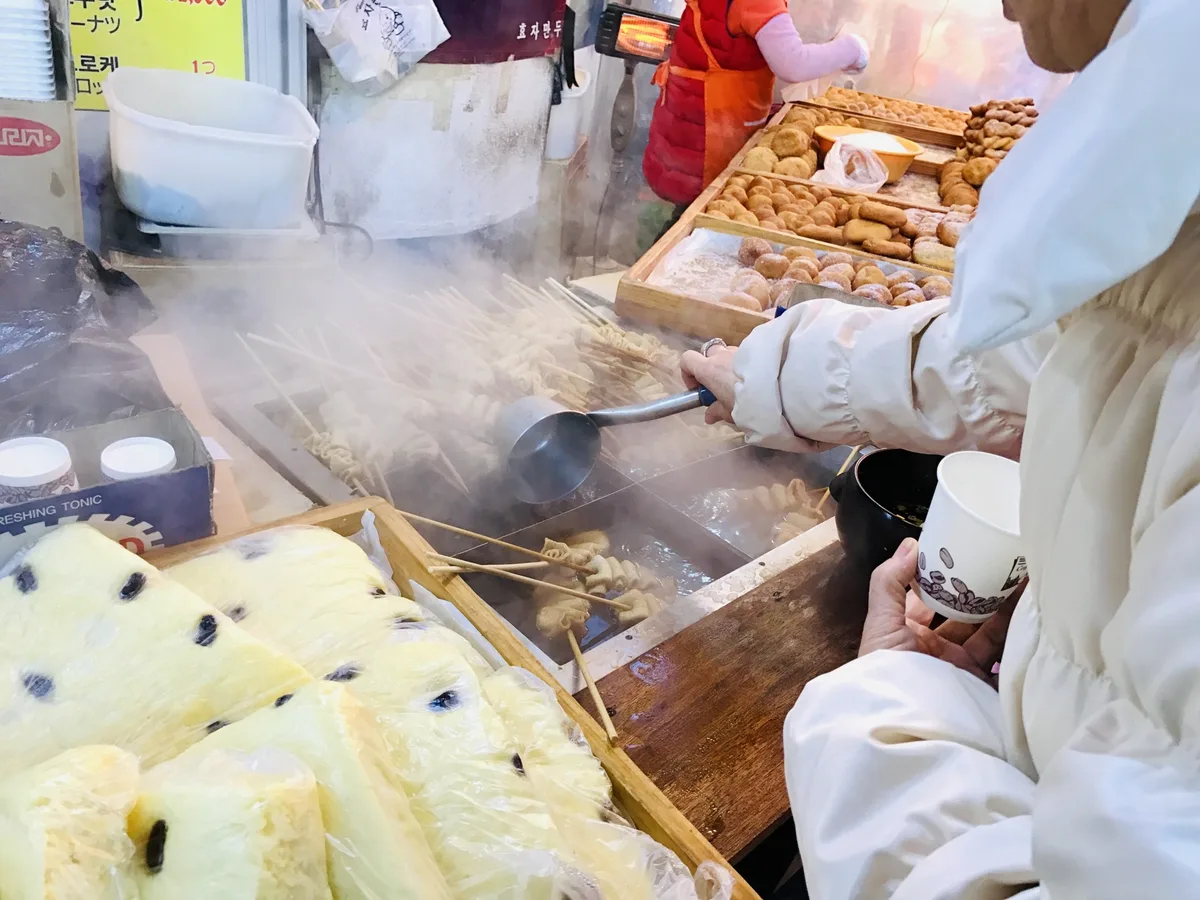
Use Namsan as a weather-dependent choice rather than a compulsory sunset appointment. The hill outing and a paid observatory are different activities, so decide whether you want the walk, the city view or a particular ticketed attraction. If visibility is poor, keep the shopping and food portion of the day and move the view to another afternoon.
For a family, finish one activity before deciding to add another. A late lunch, a long queue or tired legs is a reason to shorten the plan. For a shopping-focused trip, make room for returning purchases to the hotel; carrying several bags changes how appealing a hillside walk feels.
Day 3: Hongdae with time to explore
Use Hongdae for a different side of the city. Seoul Tourism describes the area's creative and performance culture; it is a useful place to spend unstructured time rather than treating every shop or café as an appointment. [4]
Choose a modest walking loop from a convenient Hongik University station exit, have lunch nearby, then leave the afternoon for a particular interest: independent shops, cafés, music or another nearby neighborhood. If you want a specific performance, check the venue's own programme and age or entry conditions. Street activity is not a guaranteed scheduled show.
This is also a useful day to keep lighter before an intercity journey. Confirm the next train, sort laundry and repack at a sensible hour. If you prefer museums to shopping, replace the whole day with a museum and its surrounding area rather than crossing to Hongdae for a token half-hour stop.
Add a fourth or fifth day without overloading the route
| Your interest | How to use another day | What to decide first |
|---|---|---|
| Contemporary Seoul | Choose one south-of-the-river district | The exact attractions and station, not simply the name Gangnam |
| An easier pace | Repeat a favorite area or add a second cultural visit | Which part of the first three days felt too compressed |
| A guided day trip | Give the outing a complete day | Pickup, actual return time, identification and cancellation terms |
| A family break | One substantial attraction with a rest period | Age suitability, timed entry and the journey back |
Do not use the extra day to accumulate transport. If an outing returns late, sleep in Seoul afterward rather than attaching a separate last train or flight. For a DMZ-related trip, use the operator's current programme and official access conditions; an advertised headline does not guarantee that every named site is accessible on your date.
Choose a base and transport for this route
Myeongdong or Jongno is a useful first comparison for this historic-center-heavy plan. Hongdae can work well when airport rail and evenings in that district matter more. Gangnam becomes more attractive when you replace several days with south-Seoul activities. Choose a base from the actual itinerary, not a generic claim to be central.
Save the correct station exit and the hotel entrance. A day pass is worthwhile only when your journeys fall within its coverage and the fare comparison works. A stored-value transport card is the simpler option for an uncertain or wider route. Neither decision books your intercity KTX seat. [5]
On departure day, count backwards from the airline's required airport arrival time and include collecting bags. A final café stop near the hotel is easier to shorten than an attraction on the other side of Seoul. Check the airport service for your terminal and keep a fallback when the timing is tight.
Rain, cold and limited mobility: adapt complete blocks
- In heavy rain, replace a long outdoor circuit with an indoor cultural visit and a meal in the same area.
- In winter, alternate outdoor sightseeing with warm indoor stops and allow time for bulky layers.
- For mobility needs, verify lifts at the actual station exits and step-free access at each attraction; a nearby station alone does not prove access.
- For a late arrival, use the following morning for the first major visit and keep arrival day to the hotel neighborhood.
Make the alternate plan before you need it. Keep one indoor option for each half of the city you intend to visit, with its opening day and route saved. Replacing a complete neighborhood block preserves the day better than attempting the same outdoor list in unsuitable conditions.
BEFORE YOU GO
Common questions
Are three days enough for Seoul?
Three full days can cover a coherent first visit. Three calendar days including arrival and departure give less usable time, so reduce the route to two main areas if necessary.
Should I book every activity in advance?
Book limited-entry experiences and anything central to your trip, then leave neighborhood walks and weather-dependent views flexible. Check each operator's own conditions.
Can I visit both Gyeongbokgung and Changdeokgung?
Yes, if your interests and opening days fit. Give them proper time, preferably across separate days, rather than rushing both to complete a checklist.
THE INFORMATION BEHIND THE GUIDE
References
Official and operator information checked on 9 October 2026. Recheck conditions for your own dates. The itinerary and decision examples are editorial suggestions; they are not booked services or first-hand reviews.
- Palace opening hours, weekly closures and holiday exceptions (Korean) ↗Korea Heritage Service · checked 9 October 2026
- Insadong sightseeing and neighborhood planning ↗Seoul Tourism Organization · checked 9 October 2026
- Myeongdong visitor guide ↗Seoul Tourism Organization · checked 9 October 2026
- Hongdae: culture and performance ↗Seoul Tourism Organization · checked 9 October 2026
- Transportation cards for visitors ↗Korea Tourism Organization · checked 9 October 2026
- Seoul: Gyeongbok Palace, Hanok Village and Gwangjang Tour ↗GetYourGuide / activity provider · checked 31 October 2026