Saudi Arabia · Getting around
Riyadh Public Transport: Metro, Buses, Tickets and the Last Mile
Use Riyadh's metro and buses with a clear fare comparison, Darb route planning, airport connections and realistic walking or taxi links to your destination.
Our founder previously worked for a travel company. About Destinode
On this page
Riyadh's public transport can make a city stay easier, but a nearby station on a map does not solve every journey. The route to the station entrance, the transfer and the final approach to your destination all matter. This guide treats those parts as one trip.
Fares and airport information below were checked against official guidance. For service changes and the route on your day, use current operator information rather than a development map showing future lines or extensions. A planned connection is not a usable connection until it is operating.
Start with Darb and exact entrances
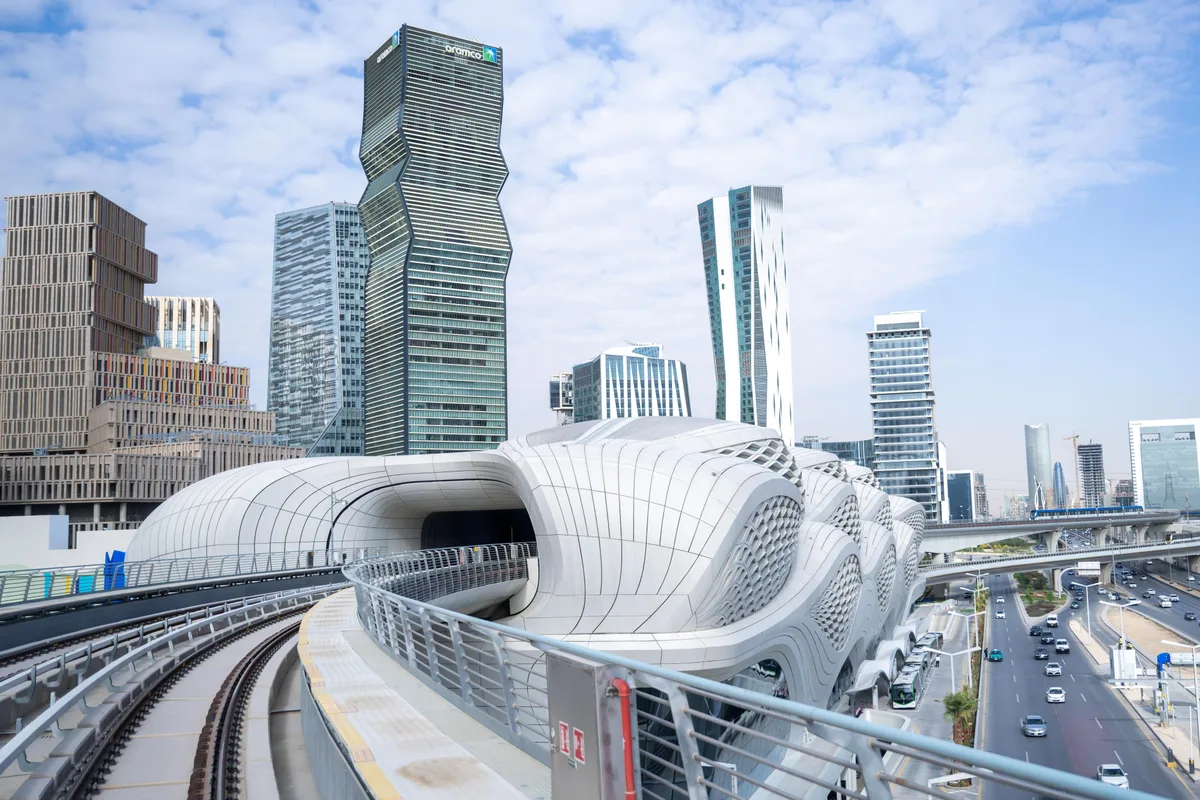
Use Darb to plan from your actual starting point to the destination, then inspect the suggested walking sections. The Royal Commission's public-transport guidance describes the integrated metro and bus system and its ticket options. It is a useful starting point for official service information. [1]
Enter a hotel entrance or a specific attraction arrival point rather than a broad district. A station can have more than one entrance, and a building on the other side of a major road may require a longer approach than the straight-line distance suggests. Look for a practical crossing rather than improvising one.
Save the route and destination address before leaving Wi-Fi. For a transfer, note the next line or bus direction and where you should leave it. You do not need to memorize the entire network; you need enough information to recognize whether you are following the correct journey.
If the plan relies on a recently announced extension or event shuttle, verify that it is running for your date. Large transport projects often appear in search results before every component opens. Use an operating service result, not an announcement alone, to build the day.
Choose a ticket from the trips you will actually make
| Regular ticket duration | Listed price | Useful comparison |
|---|---|---|
| 2 hours | SAR 4 | One short travel window |
| 3 days | SAR 20 | Repeated journeys during a short stay |
| 7 days | SAR 40 | Regular use over several days |
| 30 days | SAR 140 | Longer stays with frequent use |
The airport's official guidance lists these duration-based regular fares and describes travel across metro and buses. First Class is a separate product. Check the class, validity and activation details before paying; do not assume a longer ticket begins when it is most convenient for your itinerary. [2]
A simple calculation: five separately purchased SAR 4 travel windows total SAR 20, the same as the listed three-day regular product. More than five comparable windows within its validity can make that product cheaper. This comparison is arithmetic, not a promise of automatic fare capping or an assumption that every outing requires a new ticket.
Count travel windows, not simply station entries. Two short connected journeys may fall within one ticket's validity, while a long sightseeing stop can mean the return falls outside it. Check the current validation rules and do not assume an all-day ticket from the two-hour price.
Payment and travelling together
Official airport guidance lists Darb app or card options, ticket machines and contactless bank-card payment. Availability of a payment method does not guarantee that every foreign card will work, so keep an alternative. If a gate payment fails, use station staff or a ticketing option rather than repeatedly tapping without checking the result. [2]
For several travellers, confirm whether each needs a separate ticket or payment credential. Do not assume one contactless card can admit an entire group. Keep the same physical card or device available throughout the journey, since a phone wallet and the plastic card are not necessarily treated as identical credentials.
Check current child concessions and any evidence of age required before buying the group's tickets. Avoid applying a child's rule from an airport transfer, attraction or different city to the metro. Ask staff if the fare category is unclear rather than choosing a concession on guesswork.
If carrying luggage, keep it manageable enough to move without blocking doors or circulation. Travelling outside a busy period may be more comfortable, but never assume a quiet train means every large item is permitted. Follow the operator's current baggage and carriage instructions.
Airport journeys need the terminal and final hotel link
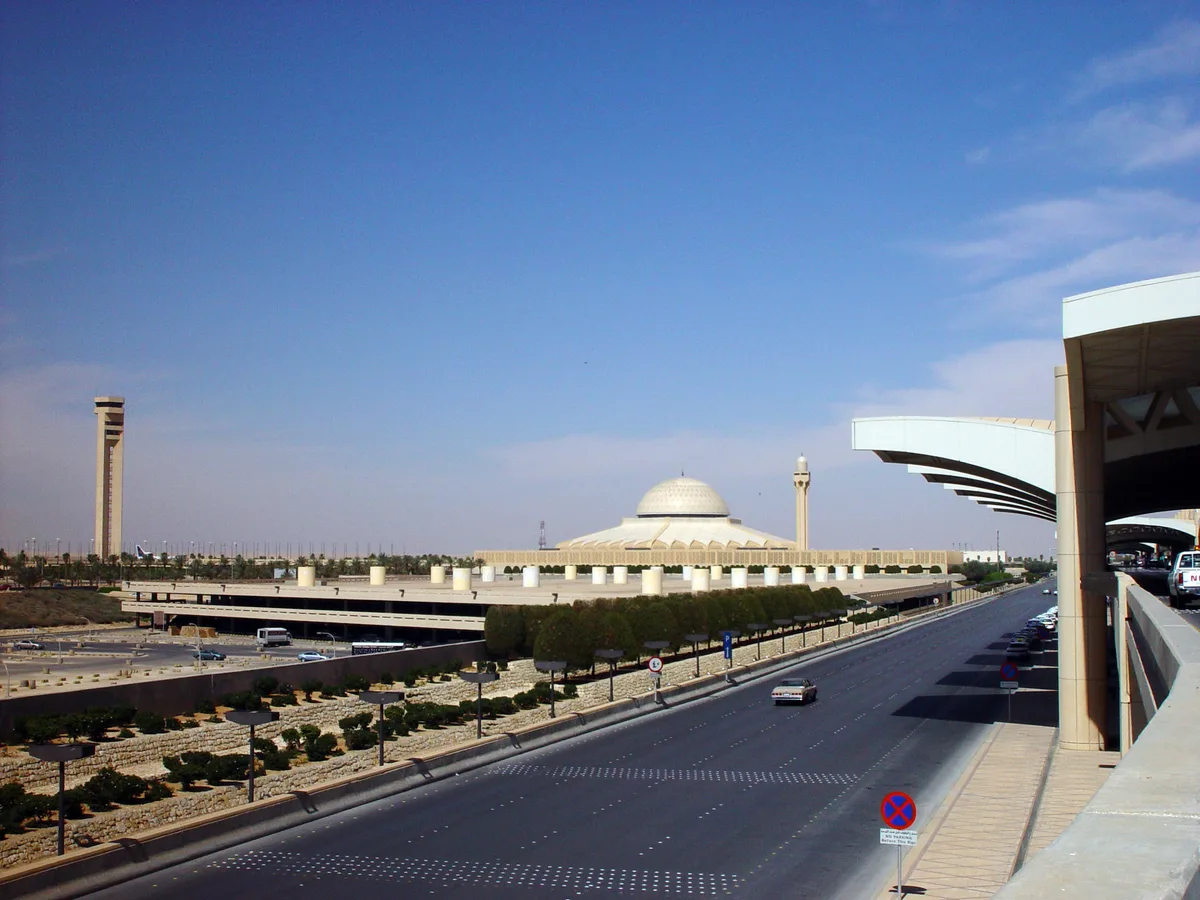
King Khalid International Airport identifies Yellow Line 4 connections for its terminal station groups. Use the signs and the airport's terminal-specific map for the flight you are taking. The rail journey still needs a separate plan from your destination station to the hotel. [2]
Compare three complete options: metro and a manageable walk, metro plus a short final ride, or a direct vehicle. The best choice depends on the time, number of travellers and baggage. A family arriving late with several cases may reasonably value the direct journey more than a small fare saving.
Check operating information for both the outward and return journey, especially near the beginning or end of service. A general network closing time is not the departure time of the last train you can use from every station. Leave room for the transfer that your actual route requires.
For departure, work backward from the airline's requirements. Include leaving the hotel, station access, transfers and the airport terminal walk. A rail journey can be predictable while the first and last walking sections still take longer than expected with luggage.
Decide when a bus or direct ride improves the trip
| Situation | Useful approach | Reason |
|---|---|---|
| A straightforward metro route and short practical walk | Metro | Simple journey with limited road exposure |
| A bus connects the final neighbourhood conveniently | Integrated route | May avoid a long station walk |
| Heat, mobility needs or heavy bags make walking unsuitable | Short direct connection or full vehicle ride | Comfort and access matter more than the map distance |
| Late meal or uncertain last service | Preplanned return alternative | Avoid dependence on a service you may miss |
Before choosing the bus, inspect the stop location, direction and wait. A stop on the opposite carriageway can be inconvenient when there is no easy crossing. If the app suggests a long walk around road infrastructure, factor that into the comparison rather than treating it as a minor detail.
For Diriyah or a desert excursion, establish the actual current route and meeting point separately. Do not infer a direct metro ride from future network plans. A tour may start at a city meeting point that is different from the attraction itself, changing which transport option is practical.
A first-day routine that prevents avoidable mistakes
- Plan one simple journey before attempting a complicated transfer.
- Confirm the destination entrance and return route.
- Choose the fare product that fits the actual travel window.
- Keep payment, phone battery and an offline address available.
- Adjust later plans after seeing the real walking and transfer time.
If you board in the wrong direction, correct the route calmly at a suitable station and check whether the ticket remains valid. Do not rush an unfamiliar staircase or cross a road unsafely to preserve an ideal itinerary. Most sightseeing plans can absorb a short adjustment.
Use public transport where it supports the day, and budget other transport where it does not. A mixed plan can retain the value of the network without requiring every journey to be the cheapest possible one. The measure of success is a comfortable, workable city day.
BEFORE YOU GO
Common questions
Is the SAR 4 ticket valid all day?
The listed regular SAR 4 product is for two hours, not a full day. Check its activation and transfer rules before using it for separated sightseeing journeys.
Is a three-day pass always cheaper?
No. Five SAR 4 windows equal SAR 20. Compare the number of paid travel windows you expect within the pass validity, without assuming automatic capping.
Can I reach every attraction by metro alone?
No. Check the actual final walk, bus connection or vehicle journey. A station near a destination on a map does not guarantee an easy pedestrian approach.
THE INFORMATION BEHIND THE GUIDE
References
Official and operator information checked on 10 October 2026. Recheck conditions for your own dates. The itinerary and decision examples are editorial suggestions; they are not booked services or first-hand reviews.
- Riyadh public transport: frequently asked questions ↗Royal Commission for Riyadh City · checked 10 October 2026
- Riyadh Metro: fares, airport stations and payment ↗King Khalid International Airport · checked 10 October 2026