Sri Lanka · Travel essentials
Travel Insurance for Sri Lanka: Medical, Safari and Surfing Checks
Check Sri Lanka travel insurance for medical transport, safaris, surfing, hired vehicles and route disruption. Review existing cover and a SafetyWing Essential option.
Our founder previously worked for a travel company. About Destinode
This guide contains affiliate links. We may earn a commission when you buy or book through them. How we fund our guides

On this page
Travel insurance for Sri Lanka should follow the route you plan to take. A Cultural Triangle visit, hill-country travel, a safari and time on a surf coast add different questions to an ordinary hotel holiday. Describe those plans before choosing a policy, then compare the documents and the complete premium for the same dates and travelers.
FCDO notes that emergency treatment outside major cities can be difficult to access and that a transfer to Colombo may be needed. Private treatment and emergency repatriation can also create significant costs. Check assistance and payment arrangements as well as the medical limit; this guide does not provide a medical-price estimate or a guarantee about a particular facility. [1]
Start with your residence and the full itinerary
Use your actual residence and the insurer’s definition of home country when requesting a quote. Include arrival, departure, transit and any onward destination. List every traveler’s age and disclose the information requested about existing conditions, symptoms, treatment or tests. A premium based on incomplete answers is not a reliable basis for choosing cover.
| Existing arrangement | What to establish |
|---|---|
| US health or travel plan | Overseas treatment and medical evacuation, with the relevant assistance contact [3] |
| UK-issued travel policy | Full route, continuous duration, health declarations and activity exclusions [4] |
| Australian card or travel cover | Activation, insured companions and the current PDS [5] |
| Canadian provincial or private benefits | Remaining overseas costs and evacuation arrangements [6] |
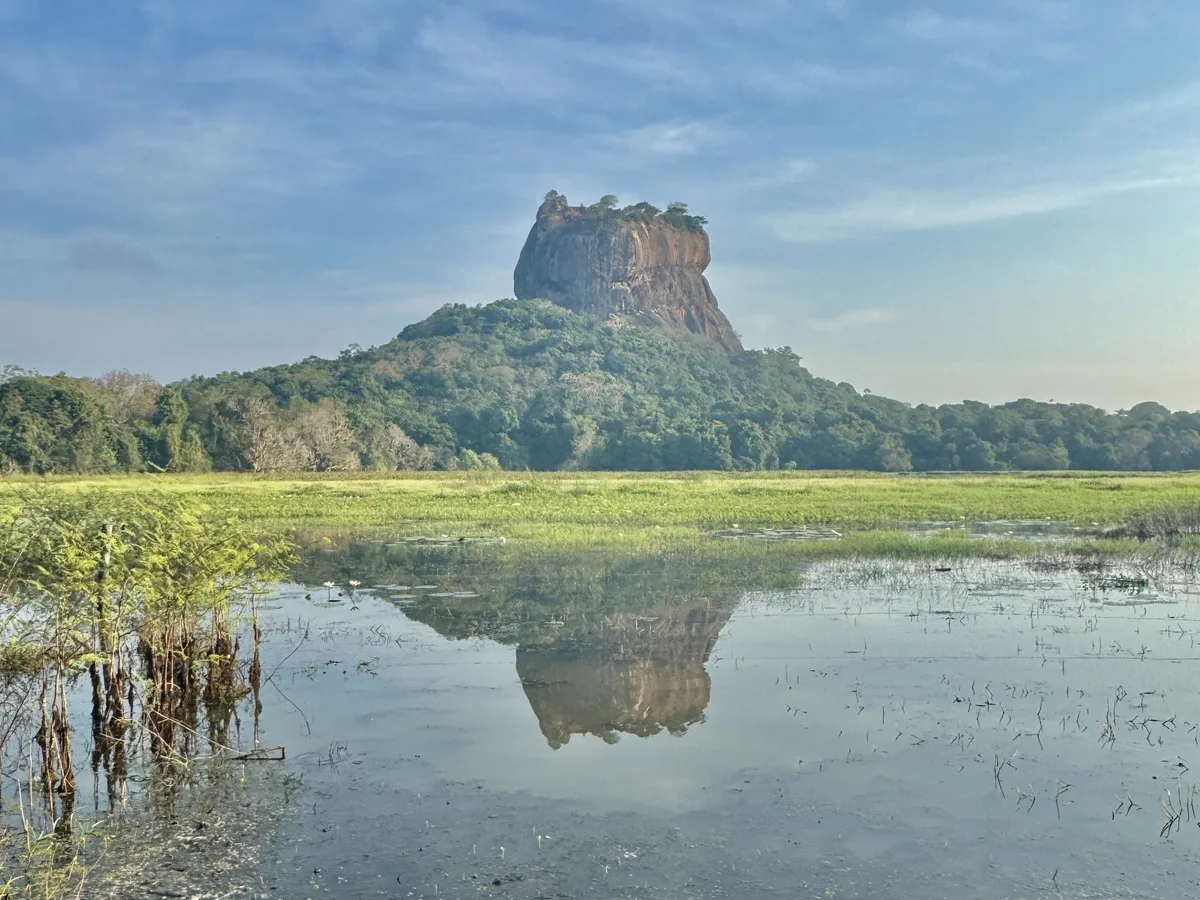
For example, write Sigiriya, Ella and your chosen south-coast town into the route rather than saying only Sri Lanka. Add the safari and surf activity separately. Your accommodation addresses help with planning assistance, while the insurance still depends on the terms of the issued policy.
Make medical access and transport part of the decision
Ask how assistance would work from each overnight base, including a park area or hill-country location. Establish how you contact the insurer, who can arrange medically necessary transport and whether payment must be authorized in advance. A transfer to a suitable hospital, a later flight home and rescue from a remote location are not interchangeable benefits.
| Check | Useful question |
|---|---|
| Treatment | Which unexpected illnesses and injuries qualify, with what excess or smaller benefit limits? |
| Transport for care | Who decides it is necessary and arranges the journey? |
| Repatriation | What destination, medical assessment and authorization apply? |
| Search and rescue | Is retrieval from a trail or water location separately insured? |
| Payment | Would I pay first, and when could inpatient billing be arranged? |
Keep the actual contact and offline documents accessible to someone traveling with you. The location of the nearest facility and its ability to provide the needed treatment are practical questions to review before a remote excursion, rather than facts established by a policy’s worldwide label. [1]
Check SafetyWing Essential as a medical-first option
SafetyWing presents Essential as travel medical insurance. It is one affiliate option to investigate when a flexible itinerary and medical protection are your main starting point. Its separate Complete product has different terms. Neither a brand name nor the reader reward answers the full coverage question for your trip. [7]
Before payment, read the selected quote’s eligibility, activity, existing-condition and payment provisions. Check any need for rescue or substantial prepaid-booking protection separately. If you already have another medical policy, ask about claim coordination. The currently published description and the documents issued to you are the relevant checks. [8]
Ask about safari, surfing, hiking and hired transport
Describe your actual participation rather than relying on an activity label. A passenger in a safari jeep, a recreational surfer, a diving student, a hiking guide and someone riding a motorbike can have different insurance conditions. State the route, depth or altitude where relevant, supervision, certification and safety equipment. Explain if any activity involves paid work, instruction or competition.
Check your own medical benefits separately from an operator’s liability insurance or a vehicle damage arrangement. Hiring a driver does not prove that your personal medical treatment is insured. Equally, a travel-medical benefit does not establish who pays to repair the hired vehicle. Obtain the operator’s contract for the relevant responsibilities.
The current Essential description has conditions for authorized routes, supervision, safety equipment and required licensing or certification, and excludes search and rescue services. Ask about these points before treating an activity add-on as sufficient for a remote hike or water activity. [8]
- Describe whether you are a participant, passenger, driver or instructor.
- Separate rescue, medical treatment, liability and equipment loss.
- Recheck the policy before adding an activity that was not part of the original plan.
Separate route changes from insured cancellation
Weather, a changed service or a personal decision to alter the itinerary can have different consequences. Begin with the carrier, accommodation and activity contracts: what is refunded, what can be rebooked and what cost remains? Then identify the policy benefit, covered reason and evidence that could address the remaining loss.
| Journey element | Save before travel | Check after a disruption |
|---|---|---|
| A reserved train journey | Booking conditions and confirmed service | Railway notice, refund or rebooking response |
| Driver and overnight stops | The agreed route and amendment/cancellation terms | Written response for unused services and changed costs |
| Safari or surf activity | The selected operator’s cancellation terms | What was canceled, why and what was refunded |
A planned visit to a place and a confirmed transport service are separate parts of the itinerary. Keep a workable road alternative where appropriate and avoid scheduling an international departure immediately after a fragile connection. Insurance does not guarantee a substitute service or reimburse every voluntary rearrangement. Cancellation before departure and interruption during travel are distinct protections. [6]
Review card cover and a longer stay
Obtain the current benefits document for the exact card and residence. Check activation, insured family members, the trip-length ceiling and activity benefits. A card paid for the international flight may still leave questions about a later extension, another traveler or an activity. Smartraveller advises checking activation and the actual PDS rather than assuming a free policy is adequate. [5]
For a longer visit, distinguish one continuous journey from repeated short trips under an annual multi-trip contract. Include the full route and any return home when checking duration. If your purpose changes to work, study or residence, establish the relevant local and private-insurance obligations instead of continuing to answer quote questions as an ordinary holidaymaker.
Before extending cover, ask how ongoing treatment and any condition arising during the previous period would be treated. A renewal, a new contract and a visa extension are separate actions. Arrange the answer while the current policy remains active. [8]
Buying while abroad needs a precise start time
If you are already in Sri Lanka, identify products that accept your circumstances and ask when new cover becomes effective. Keep the confirmation and distinguish future unexpected events from symptoms, treatment or incidents that started earlier. Explain the relevant history accurately instead of assuming an immediate purchase will cover an existing problem.
The current SafetyWing description addresses activation and additional documents for claims involving the first 72 hours after purchase. That is not a general instruction to assume a 72-hour waiting period or guaranteed immediate payment. Read the current terms supplied for your selected plan. [8]
For future trips, review insurance before departure and before substantial bookings become non-refundable. For a medical problem needing urgent attention now, seek help promptly. The time you bought a policy and the time an incident began can be important evidence, so keep both records without altering the original documents.
Save emergency contacts and collect the claim evidence
- Arrange emergency help first when required.
- Contact your insurer promptly about treatment, transport and payment conditions.
- For non-emergency care, confirm the facility’s location, reception and payment arrangements.
- Collect an itemized invoice, medical report, proof of payment and relevant supplier notices.
- Keep accurate copies and submit within the deadline in your issued policy.
Do not assume a reimbursement claim or direct-billing request has been approved merely because you have an insurance card. Confirm any payment arrangement and keep access to funds. The current Essential description explains a primarily pay-and-claim process and limited inpatient payment arrangements. [8]
Before buying, complete a short list of the existing benefits, the gap, the policy provision intended to fill it and the exclusions that still matter. An eligible policy that addresses that list is a more useful result than an unsupported claim that one brand is best for every Sri Lanka traveler.
BEFORE YOU GO
Common questions
Does travel insurance automatically cover safari or surfing?
No. Describe the specific activity, role, supervision and equipment to the insurer and check the wording. Medical treatment, rescue, operator liability and damaged equipment are separate questions. [8]
Can I rely on 1990 for a planned hospital transfer?
Suwa Seriya states that 1990 is a pre-hospital emergency ambulance service, not a routine clinic journey or general hospital-to-hospital transfer. Discuss planned or medically required transport with the appropriate facility and insurer. [2]
THE INFORMATION BEHIND THE GUIDE
References
Official and operator information checked on 13 October 2026. Recheck conditions for your own dates. The itinerary and decision examples are editorial suggestions; they are not booked services or first-hand reviews.
- Sri Lanka: healthcare access and medical evacuation ↗UK Foreign, Commonwealth & Development Office · checked 13 October 2026
- 1990 Suwa Seriya emergency ambulance FAQ ↗1990 Suwa Seriya Foundation · checked 13 October 2026
- Travel insurance: medical, evacuation and trip protection ↗US Department of State · checked 13 October 2026
- Foreign travel insurance: exclusions and extended trips ↗UK Foreign, Commonwealth & Development Office · checked 13 October 2026
- Choosing travel insurance and activating card benefits ↗Australian Department of Foreign Affairs and Trade · checked 13 October 2026
- Trip interruption and travel health insurance ↗Government of Canada · checked 13 October 2026
- Nomad Insurance Essential overview ↗SafetyWing · checked 13 October 2026
- Nomad Insurance Essential description of coverage ↗SafetyWing Insurance I.I. · checked 13 October 2026
- Electronics Theft reward terms and conditions ↗SafetyWing · checked 13 October 2026