Croatia · Itineraries
Best Time to Visit Croatia: Month-by-Month Guide
June or September? Find the best time to visit Croatia for beaches, sightseeing and fewer crowds, with a monthly guide and island-ferry checks.
Our founder previously worked for a travel company. About Destinode
On this page
The best time to go to Croatia depends on what you want to do: swim, explore Split and Dubrovnik, hop between islands or walk around Plitvice Lakes. Start with the monthly guide below, then compare June with September and check the transport needed for your route.
Our recommendations balance sightseeing, beach time and workable transport. The climate figures below are published observations; the month and itinerary choices are editorial suggestions. Check the local forecast and operator notices for your actual dates.
Croatia month by month: when should you go?
Use this as a planning shortlist, not a weather forecast. The suggested trips are our editorial choices. Croatia has distinct coastal, continental and mountain climates; a comfortable afternoon in Dubrovnik does not establish conditions at Plitvice. [1]
| Month | Our suggested trip | Main trade-off to plan around |
|---|---|---|
| January | A short Zagreb or Split city break | Choose indoor alternatives and confirmed winter opening hours. |
| February | One mainland base with flexible day trips | Keep long drives and park visits conditional on local conditions. |
| March | Historic towns and an unhurried mainland route | Treat an island excursion as optional until you have a dated sailing. |
| April | City sightseeing with a park visit if routes are open | Pack layers and rain protection; do not make swimming the purpose of the trip. |
| May | Split, Dubrovnik and walking-focused days | A strong sightseeing choice; beach time should remain a bonus. |
| June | A first Croatia trip combining the coast and an island | Our early-summer choice; reserve the specific crossings your route depends on. |
| July | A dedicated beach and island holiday | Allow for heat, queues and advance reservations at the places you most want. |
| August | Summer swimming with a settled coastal base | Avoid a plan that needs several tight transfers; keep exposed sightseeing short. |
| September | Coastal sightseeing with optional swimming | Our late-summer choice; check your exact week rather than assuming the August timetable. |
| October | Mainland towns, food and a flexible park day | Keep a wet-weather alternative and verify seasonal boat connections. |
| November | A slower city stay with museums and indoor stops | Do not rely on resort facilities or a summer island-hopping route. |
| December | A city break built around confirmed local events | Check holiday hours, heating and transport before choosing accommodation. |
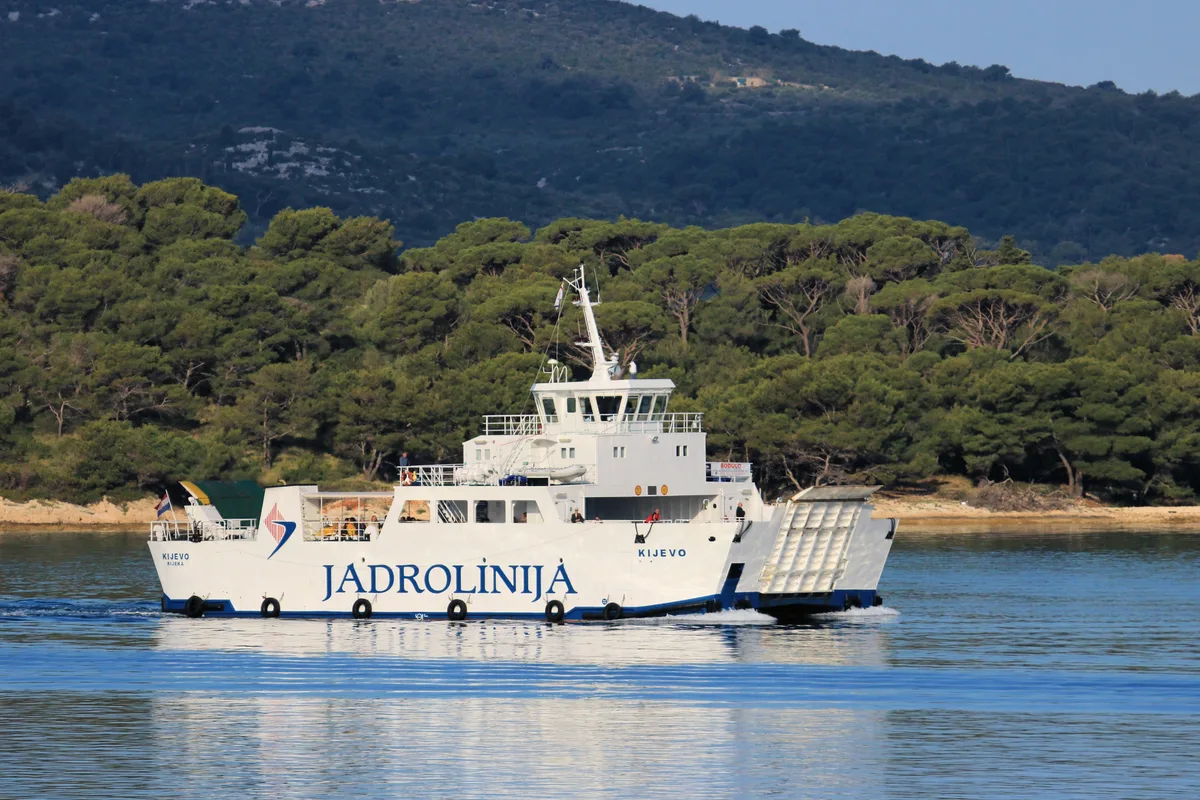
For an island trip, look up both the outward and return journey before reserving a room. Jadrolinija, Krilo and TP Line publish their own timetables and notices; a route appearing on a map does not mean it runs on your chosen day. [3] [4] [5]
June or September: weather and trip trade-offs
For a first coastal trip, June has a useful weather advantage in Split’s historical record: its mean air temperature is higher and average rainfall lower than September’s. September remains a good alternative for a later trip combining towns and beach time. Flight times, the available room and the exact island connection can decide between them. [2]
| Month | Mean air temperature | Mean monthly rainfall |
|---|---|---|
| May | 19.2°C | 57.5 mm |
| June | 23.4°C | 49.0 mm |
| September | 21.6°C | 70.9 mm |
| October | 17.2°C | 77.0 mm |
These are historical monthly averages at one coastal station, not daytime highs, sea temperatures or a forecast for the year you travel. They help compare seasons but do not describe Dubrovnik, Zagreb or Plitvice precisely. A warm air-temperature average alone cannot tell you whether swimming will feel comfortable.
| If your priority is… | How we would choose |
|---|---|
| One week in Split with an island stay | Price the same route in June and September, including both crossings and the final mainland night. |
| Swimming every day | Compare summer dates as well. Check sea conditions close to departure; no monthly recommendation guarantees comfortable swimming. |
| Dubrovnik and Split with lots of walking | Include May and early October if beaches are optional and your schedule can adapt to rain. |
| A late-September island-hopping trip | Confirm every dated leg before paying for rooms; do not reuse an itinerary checked for June. |
For example, a seven-night trip can use three nights in Split, three on one island and the final night on the mainland. That gives the island stay room to breathe and reduces dependence on a ferry immediately before your flight. It is an itinerary suggestion, not a promise that every island has suitable sailings for those dates.
Best months for beaches, sightseeing and national parks
| Priority | Start by comparing | Check before booking |
|---|---|---|
| Historic towns and moderate walking days | May, June, September, early October | Forecast, attraction hours and the amount of exposed walking |
| A summer beach and island holiday | June through September | Beach access, cooling, transfers and swimming conditions |
| Plitvice as a main attraction | A date with the desired routes operating | Entrance slot, weather, daylight and park alerts |
| A quieter mainland city break | Autumn or winter dates | Open restaurants, room heating and a rain-day plan |
If you can travel only during school holidays, reduce the number of hotel moves rather than trying to reproduce a fast shoulder-season route. If you have flexible dates, compare the full cost of flights, rooms and transport. A cheaper flight into a less convenient airport can erase the benefit of moving the trip by a week.
Spring: sightseeing first, swimming as a possibility
A spring trip can focus on city walks, food and landscapes without requiring every day to be a beach day. Pack layers and a rain option, especially when combining the coast with inland Croatia. A warm afternoon in Split does not establish the conditions at a higher, inland park the next morning.
For islands, check both the outbound and onward routes on the actual date. A hotel may be open before a convenient seasonal passenger link starts. If the boat sequence does not work, choose a mainland base and a day trip with a verified return rather than forcing a multi-island overnight route. [3] [5]
Ask the accommodation when its pool, restaurant, beach transport and other important facilities operate. 'Open all year' can describe the room business while optional services follow another calendar. If a particular facility is the reason for choosing the hotel, obtain a date-specific answer before paying.
Summer: protect comfort and the transport days
On a summer itinerary, choose a room with confirmed cooling and plan exposed sightseeing earlier in the day. Keep an indoor or shaded break instead of using every daylight hour for walking. Beach access is room-specific too: a panoramic view can come with a steep descent and an equally steep return.
The most fragile days are often the transfer days. An airport arrival followed by a last sailing leaves little recovery room. Reserve important transport after checking its conditions, and allow time for baggage, road traffic and finding the boarding point. A prepaid ferry ticket does not shorten the route from the airport.
For a family, one island base and one mainland base can provide more useful time than a string of short stays. Compare storage, laundry and easy meals alongside the nightly rate. A modestly equipped apartment near the activities you repeat may work better than a striking property that requires a paid transfer each time you leave.
Autumn: check the calendar week, not just the month
Early September and late October can support very different trips. Use a dated operator search and inspect the validity period of a published timetable. Never assume a route shown on a summer map continues through the entire autumn. The boat you need may be seasonal even when other island services continue. [4] [5]
A flexible autumn route can keep Split and Dubrovnik as its backbone and add an island only when the connection fits. If you want a particular island stay, work outward from its transport first and adjust the cities around it. This avoids buying an attractive hotel rate before discovering that the arrival requires a long detour.
Leave a weather alternative for outdoor days. A ferry cancellation, a wet walking route and a beach day you choose to skip are three different situations with different booking consequences. Keep the operator's notice, your accommodation's change conditions and the next fixed connection accessible in one place.
Winter and the inland-coast difference
A winter Croatia trip should have its own purpose: city life, museums, food or a slower stay. Do not book it as a discounted version of a summer swimming holiday. Check heating, reception hours and nearby places to eat, particularly when choosing a small coastal property outside a larger town.
Plitvice requires its own forecast and operational check. The park publishes live notices for the Upper and Lower Lakes, boats and panoramic vehicles; those are more useful for a specific visit than a photograph taken in a different season. Build the day around the routes that are actually open. [6]
If driving between inland Croatia and the coast, inspect current HAK road information and your rental company's requirements for the dates and route. Do not infer road conditions from the destination's forecast alone. Keep enough daylight and time for stops instead of combining a long drive with a tightly timed park entry. [7]
When should you go for fewer crowds or a lower budget?
If your dates are flexible, compare May, June, September and October with July and August for the same route. For a quieter sightseeing trip, our starting point is May or October with mainland bases and optional day trips. This is a planning recommendation, not a measured crowd ranking or a promise of cheaper rooms.
Compare the whole trip: flights, the same room standard, baggage, ground transfers and any overnight stop needed by a reduced timetable. A low room rate is less useful if the required flight or boat adds another travel day. Check cancellation terms as well as the displayed price, particularly when weather-sensitive activities matter to you.
There is no single cheapest month established by the sources used here, and we have not collected live hotel quotes. If you are constrained to summer school holidays, keep the trip comfortable by using fewer bases, reserving the essential transport and placing longer outdoor visits away from the hottest part of the day.
Three workable seasonal route shapes
| Scenario | Route shape | What to avoid |
|---|---|---|
| A week of summer coast time | Split plus one island, or Split plus Dubrovnik | Moving hotels every night and depending on a final-day crossing |
| Ten days of spring or autumn sightseeing | Zagreb, a park overnight and one or two coast bases | Booking the park before checking onward transport |
| A short winter break | One city with a few flexible outings | Relying on seasonal resort facilities or an unverified boat chain |
These are route frameworks, not guaranteed transport packages. Count usable days after arrival and before departure. If the first flight arrives late and the last leaves early, a five-day booking may contain only three full days; use those days in one place rather than adding another check-in.
Reserve in the order that prevents expensive mismatches
- Choose the activity and region that matter most.
- Check international flights and every necessary dated boat or bus.
- Shortlist accommodation with the required seasonal facilities and access.
- Reserve timed attractions around transport and daylight.
- Save weather, road, park and operator notice pages for a final check.
Pack for the whole route: walking shoes, a light layer, rain protection and sun protection as appropriate, then add beach or colder-weather items for the actual forecast. Keep a small bag for transfer days so you can reach water, tickets and a jacket without opening a large suitcase in a ferry queue.
BEFORE YOU GO
Common questions
What is the best month to visit Croatia?
June and September are our first choices for a mix of coastal sightseeing and beach time. May is worth comparing when walking matters more than swimming; July and August suit a summer beach trip if you can plan around heat and busy days.
Is October a good time to go to Croatia?
October can work for a flexible sightseeing trip based in mainland towns. Keep an indoor alternative, check park access and confirm any island connections for your exact dates. We would not choose it on the assumption of a daily swimming holiday.
When is the cheapest time to visit Croatia?
There is no universally cheapest month. Compare the same flights, accommodation standard and transfers outside July and August, then check seasonal services. We have not measured live fares or room prices, so the guide does not claim a guaranteed saving.
THE INFORMATION BEHIND THE GUIDE
References
Official and operator information checked on 27 October 2026. Recheck conditions for your own dates. The itinerary and decision examples are editorial suggestions; they are not booked services or first-hand reviews.
- Croatian climate regions (Croatian) ↗Croatian Meteorological and Hydrological Service · checked 27 October 2026
- Split Marjan monthly means and extremes, 1948–2024 ↗Croatian Meteorological and Hydrological Service · checked 27 October 2026
- Schedules, ticket search and current traffic notices ↗Jadrolinija · checked 27 October 2026
- Passenger catamaran routes and reservations ↗Kapetan Luka / Krilo · checked 27 October 2026
- Passenger catamaran routes and reservations ↗TP Line · checked 27 October 2026
- Current conditions and operational alerts ↗Plitvice Lakes National Park · checked 27 October 2026
- Road and traffic information ↗Croatian Automobile Club · checked 27 October 2026