South Korea · Getting around
Incheon Airport to Seoul: Which Transfer Fits Your Hotel?
The fastest train may not be your easiest arrival. Compare AREX, airport buses, taxis and transfers by hotel area, luggage and landing time.
Our founder previously worked for a travel company. About Destinode
This guide contains affiliate links. We may earn a commission when you buy or book through them. How we fund our guides
On this page
Landing in Seoul is the easy part; getting your bags to the right hotel door is the decision worth planning. Compare AREX, airport buses, taxis and private transfers using the whole journey, including the station exit, final walk and time you land.
First save the hotel’s address and nearest useful station exit. Then decide which service takes you closest to that point with a manageable number of transfers. Recheck live fares and departures for the day you land.
Choose around your actual arrival
| Your situation | Start by comparing | Main check |
|---|---|---|
| Hotel near Seoul Station | AREX express and all-stop rail | Final walk or short connection |
| Hotel near Hongik University station | AREX all-stop train | Useful station exit and luggage access |
| Hotel beside an airport-bus stop | Bus versus rail plus transfer | Current stop, route and last departure |
| Large group or difficult last mile | Taxi or private vehicle | Total fare, vehicle space and pickup rules |
Both airport terminals have different ground-transport locations. Confirm the terminal on your flight and use Incheon’s passenger information for the current boarding point. A service’s city destination is only the start of your hotel-access check. [3]
AREX express or all-stop train
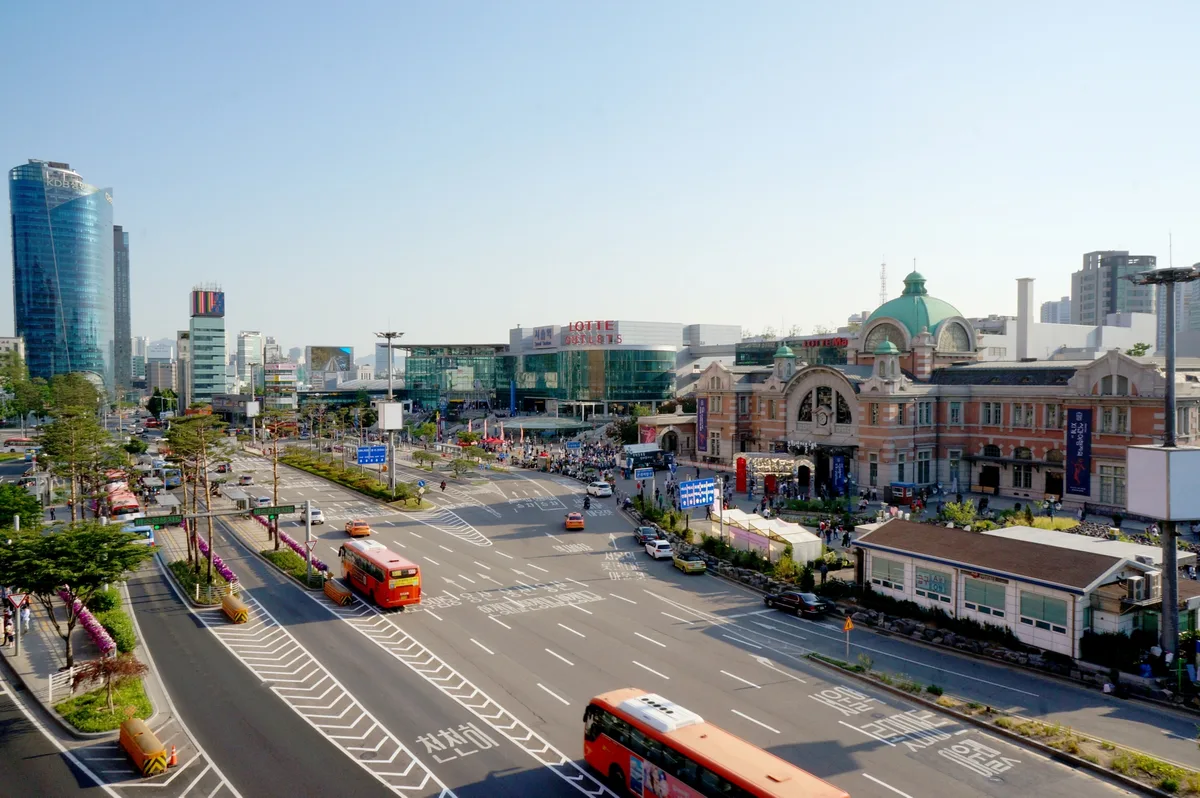
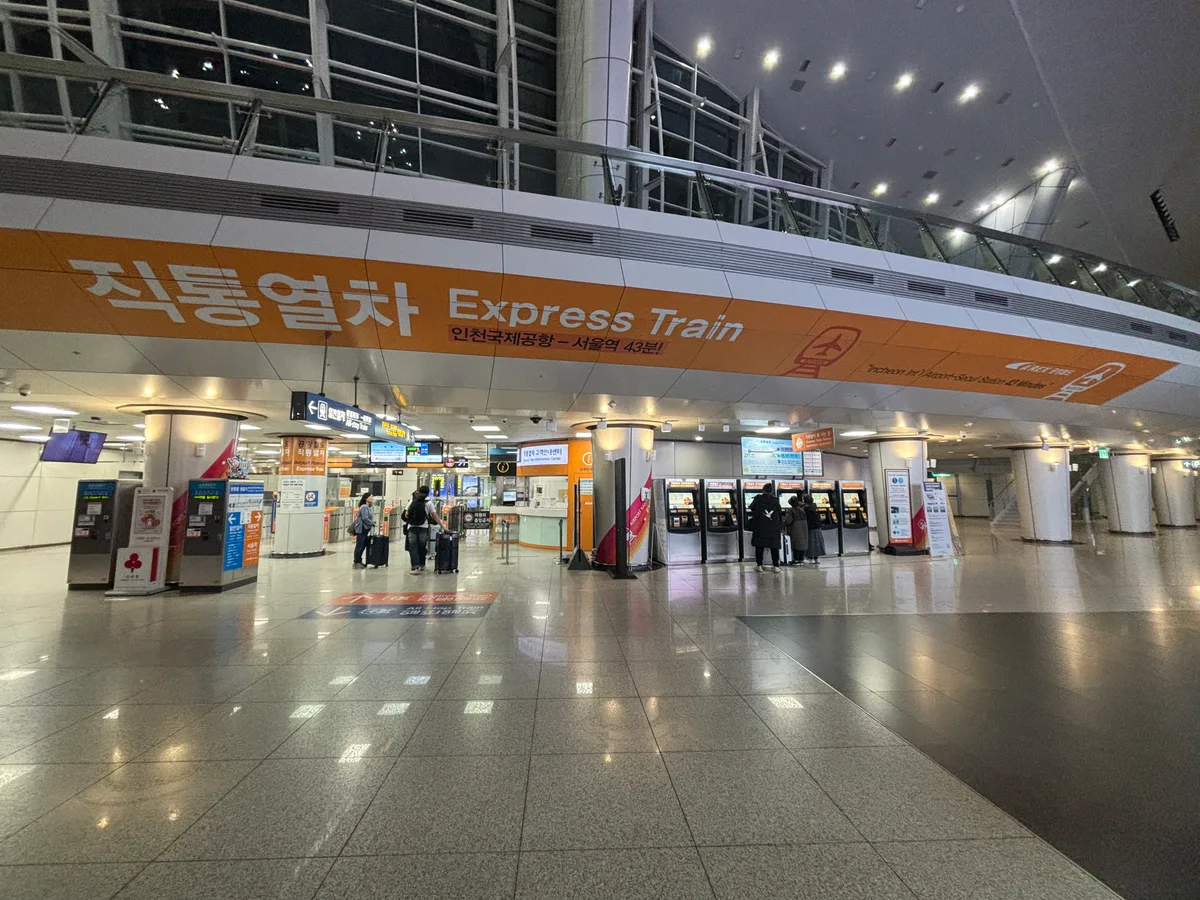
The express service runs between Incheon Airport and Seoul Station. The all-stop service serves intermediate stations, including Hongik University and Gongdeok, making it useful when your accommodation is not near the express terminus. Seoul Tourism’s official transport guide explains the distinction. [1]
For Myeongdong or Jongno, map the onward subway or road journey rather than assuming Seoul Station is the hotel district. With a suitcase, the station exit and lift can matter more than a small difference in rail time. Check the operator’s timetable and ticket rules for your terminal. [2]
When an airport bus is the easier option
A bus can remove a rail interchange when its current stop is near your accommodation. Search by the exact hotel address, confirm the direction of travel and check the distance from the stop to the entrance. The route name alone is not enough, particularly when stops change. [3]
Add road-traffic uncertainty to your decision. A direct bus may feel simpler with luggage, but a tightly timed dinner booking on arrival leaves little room for delays. Keep the first evening flexible and check whether the return service uses the same stop.
Taxis and prebooked transfers
Compare the cost for the entire party, not the fare per passenger on a train against the fare for one vehicle. Ask for vehicle capacity with your actual number of large suitcases, and distinguish an airport taxi from a prebooked pickup with a named meeting point.
- Confirm terminal, flight number and the driver’s meeting instructions.
- Ask whether tolls, waiting time and additional stops are included.
- Request child seats explicitly and get confirmation.
- Keep a contact method that works before your Korean mobile plan is active.
Use the airport’s official taxi information and the booked provider’s written terms. Do not treat a quoted city fare as a guarantee for every address. [3]
Late arrivals and a realistic last-mile plan
Use the time you expect to reach the public arrivals hall, not merely the scheduled landing time. Immigration, baggage and finding the platform all come before departure. Check the last usable service including any city connection. [2] [3]
If the margin is short, prepare a second transport option and tell the hotel your arrival may be late. Save the Korean address offline so you can show it to a driver. A hotel near the airport may be sensible before an early onward flight, but it adds another move if the following day is mainly in Seoul.
Compare the full journey before paying
- Map the hotel entrance and a usable station or bus stop.
- Select the correct terminal and a plausible public-arrivals time.
- Compare fares for the whole group, including the last connection.
- Check luggage, child seats, refunds and late-pickup conditions.
- Save a fallback route and the hotel’s late-check-in instructions.
A solo traveler with a light bag may prefer a connection that a family finds awkward. Choose for your own arrival rather than a generic cheapest-or-fastest label. Recheck the return journey independently because your departure time may change the best option.
Three arrival examples: follow the hotel, not the fastest headline
| Example | A sensible first comparison | Why another option may win |
|---|---|---|
| Solo traveler, one bag, hotel near Hongik University | All-stop AREX to the useful hotel exit | A late arrival after rail service changes the decision |
| Couple staying near Myeongdong station | Rail to Seoul Station plus the Line 4 connection, versus a nearby airport-bus stop | The bus may remove an interchange; rail avoids road-traffic uncertainty |
| Family with several suitcases and a stroller | A correctly sized taxi or transfer versus the full public-transport route | A quoted sedan may not have enough luggage space even if it has enough seats |
The Myeongdong example illustrates why train speed is not the complete measure. Add the walk through Seoul Station, the onward service and the exit-to-hotel walk before comparing with a bus stop near the entrance. The result can change when it is raining or one traveler cannot comfortably use stairs.
For cost, compare like with like. If a group has N fare-paying passengers and the individual public-transport journey costs R, begin with N × R, then add any final taxi. Compare that with a written vehicle total including tolls and waiting. Use the actual child fares and baggage needs; the formula is a method, not a price quote.
From the arrivals hall to the correct service
- After immigration and baggage, confirm whether you are in Terminal 1 or Terminal 2.
- Use the airport's current ground-transport directions for the rail station, ticket desk, bus stop or taxi rank.
- For rail, choose Express or all-stop intentionally and verify the destination before paying.
- For a bus, check the route number, direction and exact hotel-side stop with the ticket seller.
- For a booked car, follow the written meeting instructions and verify the booking identity before leaving with the driver.
- Keep the hotel address and the fallback route available until you are checked in.
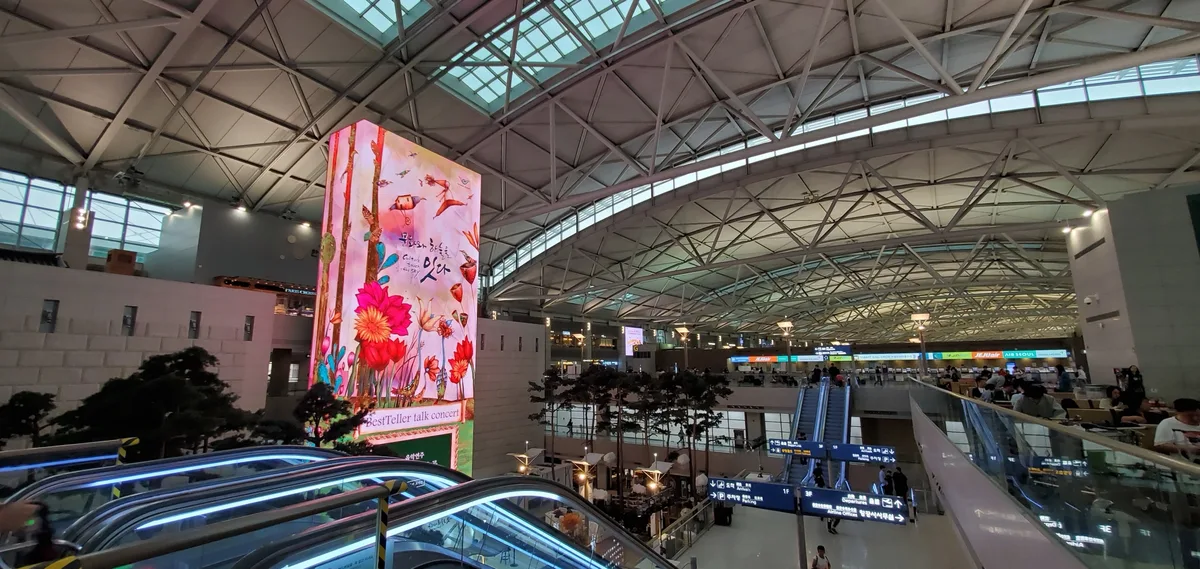
Airport layout and boarding instructions should come from Incheon's current passenger information. For a late arrival, check the last useful city connection as well as the first airport service. Arriving at Seoul Station after your onward route has ended can still leave a taxi journey. [3]
If buying a reseller's AREX voucher, read the exchange or seat-selection process before walking to the gate. A payment receipt, voucher and issued train ticket may be different documents. Verify the chosen departure and terminal in the final ticket; do not assume an open-date product reserves a seat on the next train.
On the return trip, select the terminal shown by the airline for that departure and allow the airline's required airport margin. Do not simply reverse the route's landing-time calculation: check-in and bag-drop deadlines apply before departure, and the hotel checkout or luggage collection adds another step.
BEFORE YOU GO
Common questions
Does the express train stop at Hongdae?
The express runs to Seoul Station; the all-stop route serves Hongik University station. Compare the operator’s current service information before buying.
Will I catch the last train after landing?
Check the departure for your terminal and allow for immigration and baggage. A landing time is not a platform-arrival time, so keep an alternative if the connection is close.
Is a private transfer cheaper for four people?
Compare a written vehicle quote with four rail or bus fares plus the last connection. Include tolls, waiting and the vehicle size you actually need.
THE INFORMATION BEHIND THE GUIDE
References
Official and operator information checked on 9 October 2026. Recheck conditions for your own dates. The itinerary and decision examples are editorial suggestions; they are not booked services or first-hand reviews.
- Getting to Seoul: airport rail and ground transport ↗Seoul Tourism Organization · checked 9 October 2026
- Airport Railroad: services, tickets and notices ↗Airport Railroad · checked 9 October 2026
- Incheon International Airport ↗Incheon International Airport Corporation · checked 9 October 2026