South Korea · Getting around
Tmoney vs Climate Card: Which Korea Transport Card Wins?
Tmoney or Seoul's Climate Card? Compare coverage, airport limits and a worked cost example before buying a pass that may not fit your route.
Our founder previously worked for a travel company. About Destinode
On this page
An unlimited pass is only useful on journeys it actually covers. Before choosing Tmoney or a Climate Card, count your Seoul travel days, check the network boundaries and include your airport journey separately. The worked comparison below shows how to make the choice for your own route.
Start with your actual days in Seoul and whether you will travel beyond it. Then choose the product that covers those journeys with the least friction, rather than buying a card because it appears in every packing list.
Choose the kind of product before choosing the brand
| Product | How to think about it | Useful starting point |
|---|---|---|
| Tmoney / other stored-value transport card | Top up a balance and pay eligible fares | A changing itinerary or a trip across several cities |
| Climate Card short-term pass | Pay for consecutive days within a defined network | A concentrated Seoul sightseeing stay |
| Tourist payment card with transport functions | Payment, exchange and transit features may be separate | A traveler who has checked fees and each balance |
| Attraction pass | Admission product with its own inclusion list | A specific set of paid attractions, not a default transport solution |
KTO describes Tmoney and EZL as reloadable options and also explains tourist-oriented products such as WOWPASS and Mpass. Read the functions and refund rules for the exact card. A payment logo or a tourism brand does not mean unlimited travel. [1]
The 2026 Climate Card change tourists should know about
Seoul's current notice says the 30-day prepaid Climate Card could be recharged only through 31 August 2026, while existing cards can still take short-term passes. The replacement Climate Pass has residence and registration conditions. A short-stay visitor should therefore look at the short-term tourist product, not follow an old 30-day-pass recommendation. [3]
| Short-term validity | Listed pass price | First physical card |
|---|---|---|
| 1 day | KRW 5,000 | Add KRW 3,000 if you need the card |
| 2 days | KRW 8,000 | Same separate card purchase |
| 3 days | KRW 10,000 | Same separate card purchase |
| 5 days | KRW 15,000 | Same separate card purchase |
| 7 days | KRW 20,000 | Same separate card purchase |
Choose a duration around consecutive usable days. If day three is spent on a long-distance train to Busan, a Seoul pass does not become better value simply because its printed duration matches the number of days remaining in your holiday.
Check the airport rule and the edge of the network
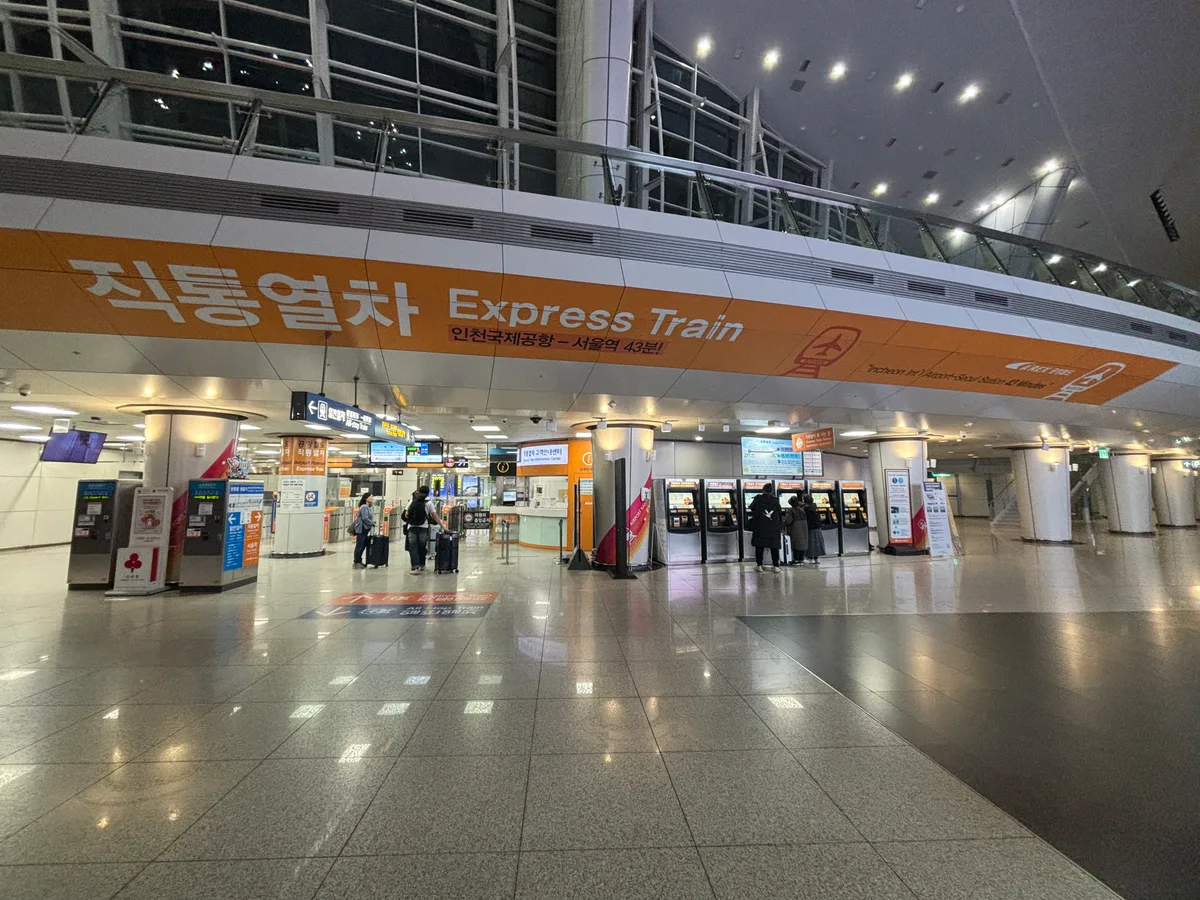
The city's coverage guide excludes airport buses and the Sinbundang Line. On AREX, it lists normal coverage from Seoul Station to Gimpo Airport, with a special allowance to exit at Incheon T1 or T2 after boarding in the covered area; boarding at Incheon T1 or T2 is not allowed with the pass. It is not an AREX Express ticket. [2]
That one-way airport exception is easy to miss. For your first journey from Incheon, buy the appropriate airport fare separately. For departure, check that your chosen train and boarding station meet the current rule; do not assume any product called an airport train is covered.
For a trip beyond Seoul, use the official station and bus coverage lookup. A line can run both inside and outside the included area. Search the precise start and end stations rather than relying on the color of the line on a map. Keep another means of payment for journeys outside the pass area.
Work out whether the pass is worth it for you
List the local journeys you genuinely expect to make, excluding KTX, airport buses and other journeys outside the product. Add their current pay-as-you-go fares, then compare the short-term pass and the physical card cost if you do not already own one.
| Illustrative 3-day fare basket | Calculation | What it means |
|---|---|---|
| Eligible ordinary fares total KRW 16,000 | 16,000 − (10,000 + 3,000) = KRW 3,000 | The first-card pass option saves KRW 3,000 in this assumed basket |
| Eligible ordinary fares total KRW 9,000 | 9,000 − (10,000 + 3,000) = −KRW 4,000 | Paying ordinary fares costs less in this assumed basket |
Also think about convenience. A very small theoretical saving may not justify a special trip to buy another card. Conversely, a pass can simplify repeated covered journeys when you already know the route. Do not count walks as hypothetical paid rides to inflate the saving.
Buying, loading and starting the right clock
For a physical stored-value card, buy the card and load a usable balance; the card purchase price is not itself travel credit. Keep some Korean cash available until you have checked the loading method at the place you intend to use. Do not infer that a shop accepting your foreign bank card must also accept it for every transit top-up.
For the short-term Climate Card, the validity begins on the date it is charged, rather than as a rolling 24-hour period. The city lists international-card payment support for short-term passes at supported facilities. Check the displayed start and end dates before payment, especially late in the evening. [2]
For children, ask about the applicable fare registration before loading an adult product. For mobile products, verify the exact phone, operating-system and registration requirements. A physical card can be a simpler choice when an app expects credentials you do not have as a visitor.
Using the card without mixing up balances or passengers
- Keep the transport card separate from other contactless cards so the reader detects the intended one.
- Use the same card consistently for a journey and follow tap-in and tap-out instructions.
- Check the balance or pass-validity display before the next ride.
- Keep each traveler's card identifiable and ask staff about any child or group arrangements.
- If the reader rejects a journey, confirm coverage and validity instead of repeatedly switching cards.
Do not assume that topping up a tourist payment wallet also funds its transport function. Where a product has separate balances, check both. If you are relying on a pass, save the coverage page before traveling beyond familiar central stations.
Leaving Korea: avoid a large unused balance
Load in practical increments instead of depositing the whole trip budget on the first day. Near departure, estimate the remaining local journeys and keep enough for the last connection. This reduces dependence on finding a refund counter with the right opening hours.
Refund procedures, deductions and registration requirements differ by product. Check them before purchase if you expect to leave a substantial balance. A card refund and the cancellation of a time-limited pass are different transactions, and a refund service may be less convenient for a traveler without a Korean bank account. [1] [2]
Keep your airport fare and any luggage-storage payment separate from the refund plan. Do not empty the only working transport balance before you have reached the terminal or bought the final ticket.
BEFORE YOU GO
Common questions
Can I use the Climate Card from Incheon into Seoul?
The current city guide does not permit boarding with it at Incheon T1 or T2. Buy the appropriate arrival fare separately and distinguish AREX Express from the all-stop service.
Is a three-day pass valid for 72 hours?
The listed short-term product begins on the charging date and uses calendar-day validity. Check the displayed expiry before charging it late at night.
Which card should I choose for Seoul and Busan?
Start with a stored-value product that suits your local journeys, and buy the intercity train separately. A Seoul-specific pass should be evaluated only for its covered portion of the trip.
THE INFORMATION BEHIND THE GUIDE
References
Official and operator information checked on 9 October 2026. Recheck conditions for your own dates. The itinerary and decision examples are editorial suggestions; they are not booked services or first-hand reviews.
- Transportation cards for visitors ↗Korea Tourism Organization · checked 9 October 2026
- Climate Card: short-term fares, validity and service area ↗Seoul Metropolitan Government · checked 9 October 2026
- Climate Pass transition and short-term visitor passes ↗Seoul Metropolitan Government · checked 9 October 2026