South Korea · Itineraries
South Korea Itinerary: Choose a 7, 10 or 14-Day Route
Build a first South Korea route around Seoul, Busan, Gyeongju and an optional Jeju stay, with travel days and a departure buffer included.
Our founder previously worked for a travel company. About Destinode
On this page
A first route works better with a few meaningful bases than a new hotel every night. Start with your entry and exit airports, then place the longest moves on dedicated travel days.
The routes below are DESTINODE planning suggestions, not an escorted tour or a promise of specific train availability. They include an arrival day and a departure day; six hotel nights therefore make a seven-day trip.
Choose airports and a small number of bases
If flight options suit you, arriving in Seoul and departing from Busan can reduce backtracking on a mainland trip. If your international return is from Seoul, build the final connection explicitly into the route instead of hoping a late intercity train will fit the flight.
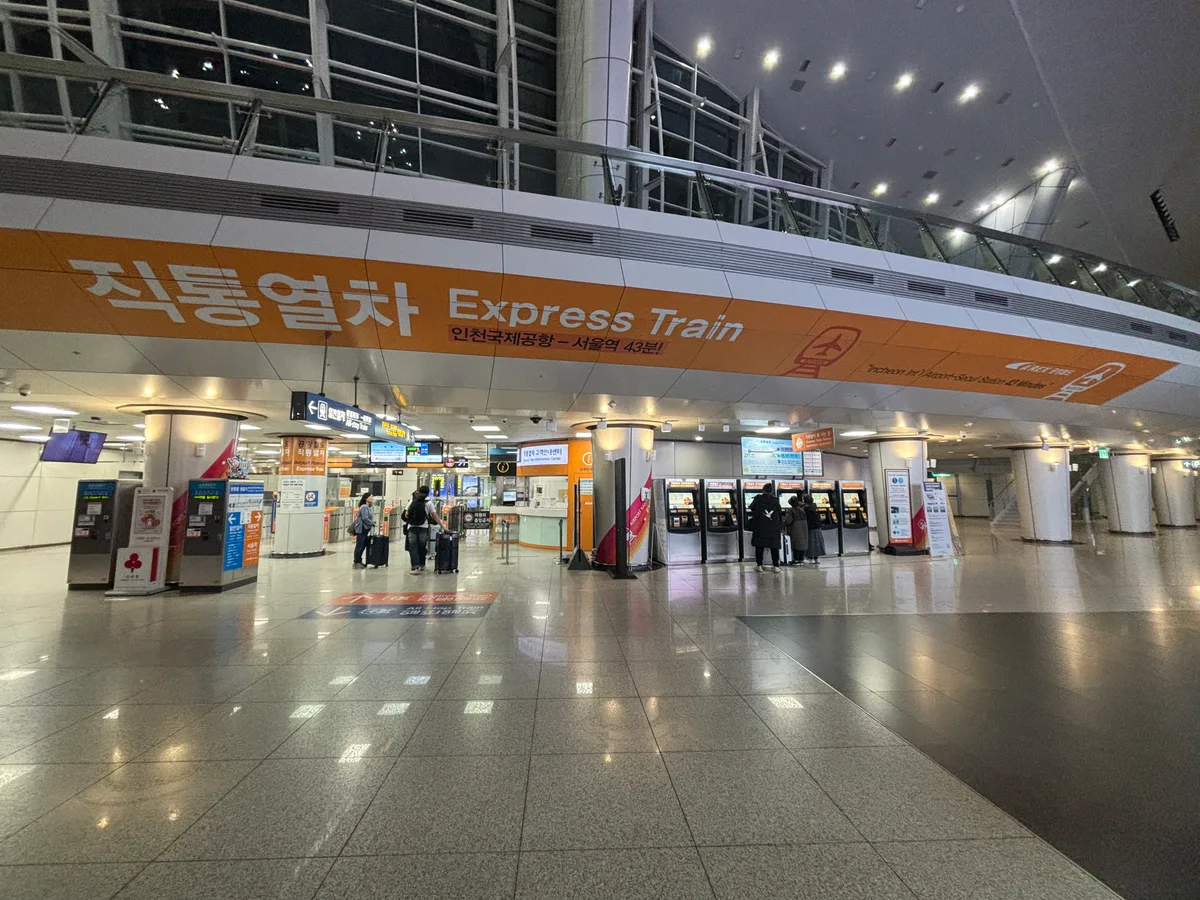
Korea’s passenger trains connect major mainland cities, while a Jeju addition requires a separate island connection. Use the official train service and Jeju travel information to check the actual options. [1] [2] [3]
Seven days: Seoul and Busan
| Days | Base and nights | A realistic focus |
|---|---|---|
| 1–4 | Seoul: 4 nights | Arrival, historic neighborhoods, markets and one flexible day |
| 5–7 | Busan: 2 nights | Travel on day 5, a coastal city day, then departure |
Use the first evening for settling in rather than a prepaid cross-city activity. Group Seoul sights by neighborhood. In Busan, choose either the old-port side or the eastern beaches as your main focus rather than crossing the entire city several times in one day.
If you return internationally from Seoul, either shorten the Busan stay or replace one Seoul night with the final-night buffer. A week does not comfortably absorb every region plus extra flights.
Seoul and Jeju in seven days: replace Busan
A week can cover Seoul and Jeju if those are your two priorities. Use the six-night plan below as an alternative to Seoul and Busan. The flight days are transfers, and the final mainland night protects some time before an international departure; it is not a guarantee against disruption.
| Day | Overnight | Practical plan |
|---|---|---|
| 1 | Seoul | Arrive and settle into one neighborhood |
| 2 | Seoul | One full city day; choose palaces and nearby streets or another focused area |
| 3 | Jeju | Fly from the airport on your ticket and keep the afternoon local |
| 4 | Jeju | One island region using buses, selective taxis or a booked tour |
| 5 | Jeju | A second regional day, with a weather alternative |
| 6 | Seoul or departure-airport area | Fly back to the mainland; avoid another long excursion |
| 7 | Departure | Use the actual international check-in deadline |
This gives Jeju two full days between the flight days. Prefer more time in Seoul? Move one island night to the city and accept only one full Jeju day, or save Jeju for a longer trip. With children or bulky bags, three separate hotel stays may already be enough movement for a week.
Ten days: add Gyeongju
| Days | Base and nights | Planning role |
|---|---|---|
| 1–4 | Seoul: 4 nights | City days without an immediate long onward journey |
| 5–6 | Gyeongju: 2 nights | Heritage visits and a slower evening |
| 7–10 | Busan: 3 nights | Coast, markets and a flexible day before departure |
When checking Gyeongju trains, distinguish the rail arrival point from the historic center and add local transport. Reserve accommodation around the sights you will actually visit, not simply beside whichever station appears first in search results. [1]
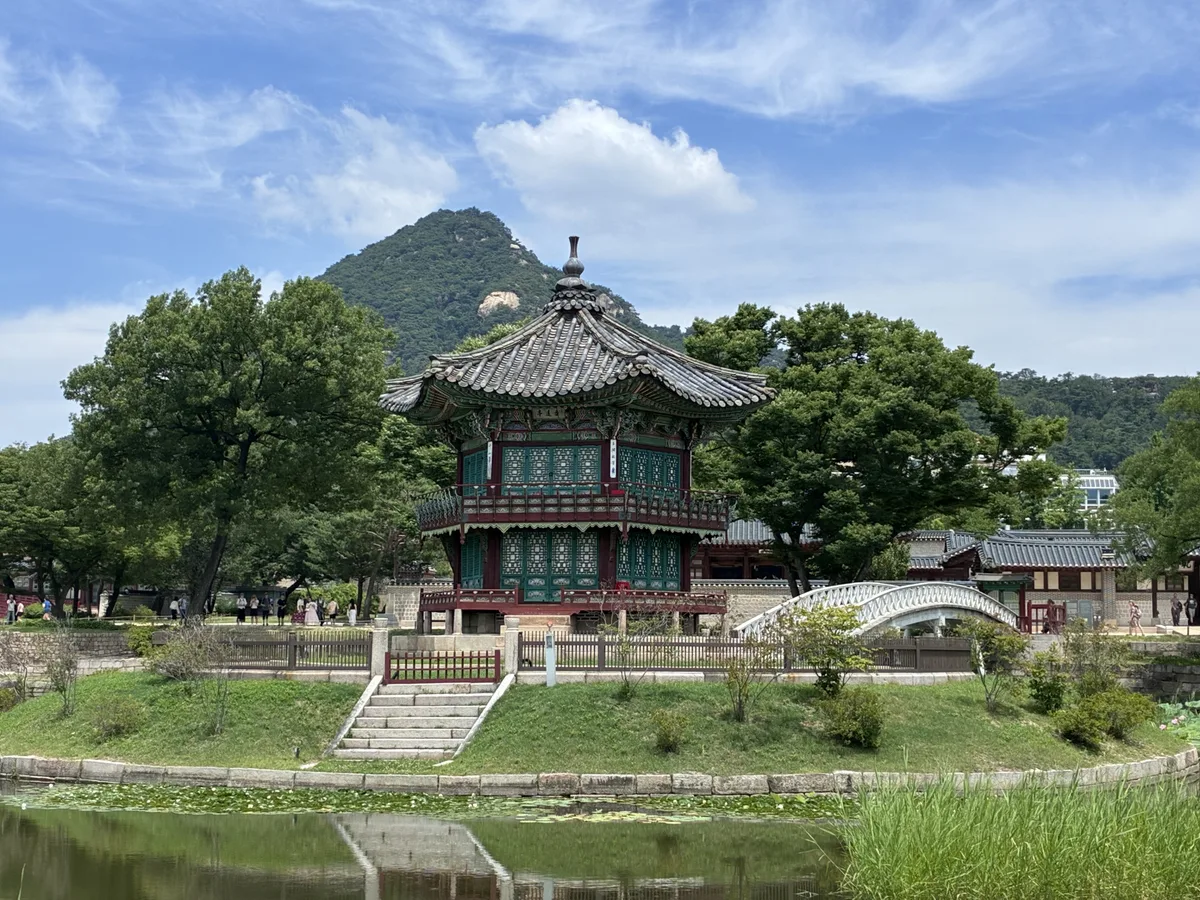
Fourteen days: Jeju or a slower mainland trip
One island version keeps the ten-day mainland sequence, flies to Jeju on day 10, spends three nights there, and returns to Seoul for a final night on day 13 before departure on day 14. That totals thirteen nights. Check the actual Busan–Jeju and Jeju–Seoul flights before treating the order as fixed.
Jeju is not a small extra stop between mainland sights. Choose a base and a few geographic clusters, using the island’s official visitor information to plan transport. [3]
A simpler alternative adds those four days to your existing mainland bases. This suits travelers who prefer fewer flights, more rest or extra time with children. More available days do not require more hotel changes.
Adapt for children, couples and your budget
- With children, protect meal and rest periods before adding a day trip.
- With large bags, stay near a useful transport route and check room access.
- For couples, spend extra time in a setting you enjoy rather than moving for one photograph.
- For a higher budget, compare better-located rooms and flexible transport before adding another region.
A special room night is most useful when you can actually enjoy the property. If you arrive late and leave early, the location and clear check-in arrangements may be more valuable than a premium view.
Book the route in a sensible order
- Confirm entry requirements and international flights.
- Choose the number of bases and count nights.
- Check real train or domestic-flight options for each transfer.
- Reserve the key rooms with compatible cancellation terms.
- Add dated activities around transport, not over the top of it.
- Recheck services and keep the final international departure protected.
Use KORAIL for the relevant official train bookings and compare the exact station names, departure times and fare conditions. A ticket seller’s route summary is not proof that a particular departure has seats. [2]
Turn the seven-day route into usable days
| Day | Suggested focus | Protect this time |
|---|---|---|
| 1 | Arrive in Seoul, check in and eat nearby | Immigration, airport transfer and rest |
| 2 | A palace and the surrounding historic area | The palace's actual opening day |
| 3 | Central market, Myeongdong and a flexible viewpoint | Weather and a meal break |
| 4 | Hongdae or another interest-led neighborhood | Laundry and the next train confirmation |
| 5 | Train to Busan and explore near the hotel | Station transfers and check-in |
| 6 | One coherent coastal or old-port city day | Avoid repeated cross-city journeys |
| 7 | Leave from Busan | Airport transfer and airline deadlines |
Swap the Seoul palace day around the official closing calendar. The palace authority lists different weekly closures for Gyeongbokgung and Changdeokgung and holiday exceptions, so the day number should not determine the attraction. [5]
For Busan, decide whether your main interest is the old-port side or the eastern beaches before choosing the hotel. Trying to visit both ends repeatedly in one day uses time you could spend on the waterfront. Keep day 5 modest: the intercity train is only the middle of a door-to-door travel day.
What to cut when flights or energy change the plan
If your international departure is from Seoul, the cleanest seven-day adjustment is to stay in Seoul on the final night. That reduces the time available in Busan, so decide whether the coastal city is still a priority. Another good short trip is Seoul with one carefully chosen outing; the two-city route is not compulsory.
For ten days, the extra Gyeongju stay is most valuable when heritage is a real interest. Use the arrival afternoon for a nearby area, one full day for the main visits and the departure morning without another major booking. If history is secondary, put those nights into Seoul and Busan instead of adding a hotel change for the sake of the map.
For fourteen days with Jeju, count actual full island days between flight arrivals and departures. Three nights may provide only two full sightseeing days. Cluster the island activities around the base and transport you can use, rather than attempting opposite sides every day. The official Jeju guide is a starting point for choosing regional attractions. [3]
Keep a simple cost worksheet: hotel nights by city, each intercity ticket, airport transfers, local transport, planned admissions and a food allowance you choose. Label the food allowance as your budget assumption, not a national average. Compare the route without Jeju against the island version including bags, transfers and the extra flight.
Before paying the final non-refundable balance, ask whether the itinerary survives one delayed flight or one wet day. If every hotel move depends on the preceding activity finishing exactly on time, remove a stop. A route with a little spare time is easier to enjoy and easier to repair.
BEFORE YOU GO
Common questions
Can I fit Jeju into one week?
You can replace part of the mainland route with Jeju, but adding it to Seoul and Busan uses time for flights and transfers. Choose which experience matters most rather than squeezing in every region.
How many hotel changes are sensible?
The sample week uses two bases and the ten-day route uses three. Add a move when it gives you a different experience or protects an important connection.
Are these routes possible without a car?
The mainland sequence can be built around trains and local transport. Jeju needs more careful base selection and a mix of buses, taxis or organized trips, depending on your chosen sights.
THE INFORMATION BEHIND THE GUIDE
References
Official and operator information checked on 9 October 2026. Recheck conditions for your own dates. The itinerary and decision examples are editorial suggestions; they are not booked services or first-hand reviews.
- Trains in Korea ↗Korea Tourism Organization · checked 9 October 2026
- Official train reservations ↗KORAIL · checked 8 October 2026
- Official Jeju travel guide ↗Jeju Tourism Organization · checked 9 October 2026
- Official South Korea travel guide ↗Korea Tourism Organization · checked 9 October 2026
- Palace opening hours, weekly closures and holiday exceptions (Korean) ↗Korea Heritage Service · checked 9 October 2026